
Grayson County 72-Hour Release Status
No official Grayson County 72-hour release list was found. The detention center sends visitors to a Combined Public Communications page labeled Currently Booked Inmates. It has no released tab, three-day filter, or past-release archive. Jailer Jason Woosley runs the detention operation, so GCDC is the first office for its booking and release entries. The Grayson County Sheriff maintains separate sheriff records and should not be treated as the jail record custodian.
The lack of a public feed changes the task. A person missing from CPC may have left on bond, completed a sentence, received a court order, moved among the main, female, and annex facilities, or entered another custody system. GCDC also houses people connected to KDOC, the U.S. Marshals, BOP, and ICE. A three-day list assembled from roster absences would mix those outcomes and could falsely label transfers as releases.
Check Grayson Three-Day Releases
Define the window with start and end dates and times. A rolling 72-hour period is not always the same as the last three calendar dates. Gather the full name, age or birth date, booking date, and booking number if known before contacting an office.
- Open the official GCDC inmate-listing handoff and check whether the person remains on the current CPC roster.
- Call the applicable GCDC facility and ask whether an existing entry records release or transfer during the defined three-day span.
- Search Kentucky VINE for a dated not-in-custody result and read the event label. A transfer alert is not community release.
- Review the Grayson court case for a bond, dismissal, sentence, or other order that explains the legal basis.
- For a state-sentenced person, compare KOOL with the KDOC Daily Releases report for the applicable business date.
- Request the existing GCDC booking and release transaction when an exact time, reason, or destination is needed.
For a period confined to today, the Grayson County 24-hour release process keeps the check narrow. The broader range is more useful when office and archive dates cross a weekend.
Grayson 72-Hour Record Fields
Because CPC does not show a released-person feed, the following fields belong in a request for an existing GCDC record. They should not be described as public roster columns. Ask for the record's own wording rather than proposing a release reason.
| Field | What it resolves |
|---|---|
| Name and booking number | Matches one person to the correct custody episode. |
| Booking date and time | Separates repeated stays and anchors the period. |
| Release date and time | Shows whether departure falls within the exact 72-hour window. |
| Release disposition or type | Records bond, court order, sentence served, transfer, or another stated result. |
| Destination or receiving agency | Distinguishes community release from continued custody. |
| Hold or detainer | May explain why one resolved case did not result in physical release. |
A charge-table disposition is not the same field as the final custody disposition. Likewise, a listed bond amount does not prove that money was posted or that processing ended. The actual GCDC release transaction supplies the most useful local date, time, and outcome.
Grayson Weekend Release Windows
A 72-hour range can bridge Friday evening through Monday evening, or cross a state holiday. That wider view reduces the chance that an event is missed merely because an archive is arranged by business date. It does not remove the need to verify. No source publishes a routine Grayson release hour, weekend processing schedule, roster refresh rate, or delay between physical departure and removal from CPC.
KDOC's Daily Releases archive is organized around business-day reports. A weekend state release may therefore need confirmation through KOOL and the underlying DOC record even when the archive does not line up with a reader's rolling period. The archive is also limited to DOC releases. It does not become a Grayson County bond-out list just because a state inmate was once housed locally.
Court timing adds another layer. An order may explain why release was authorized, yet it may not state when jail staff completed processing or whether a separate hold remained. Pair the court event with the physical release entry.
Why Grayson Roster Names Vanish
The CPC system reads a replaceable current-inmate data file. Its visible list shows a photo thumbnail, name, age, and a details control. A detail can add physical descriptors and charge information. It does not display a release date, time, reason, destination, or released status. The vendor and GCDC state no update cadence and no post-release display interval.
The Grayson currently booked roster shows that current-only design.
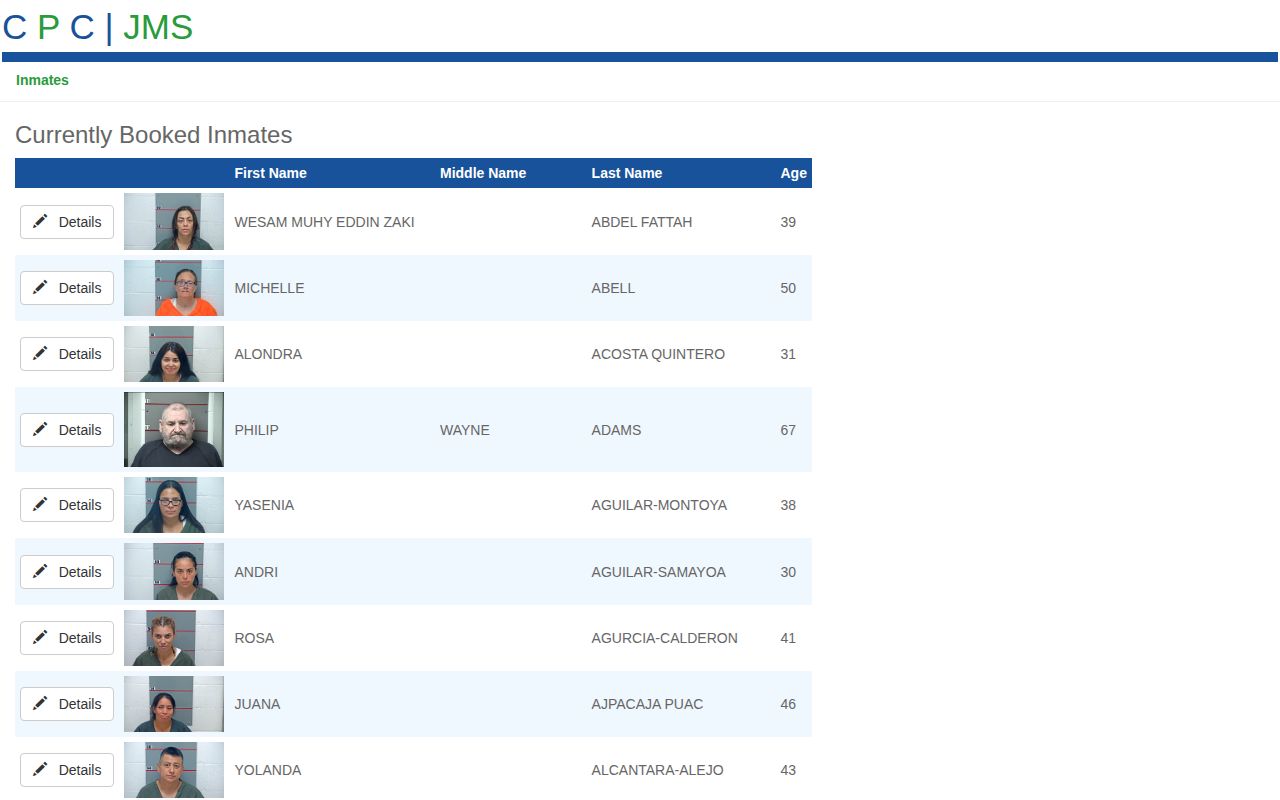
The captured screen documents names and current-detail controls, not a three-day archive. Its release value is negative and limited: disappearance creates a question about what happened next. It never supplies the answer by itself.
A fresh change may also move through connected systems at different times. VINE, a court docket, KOOL, and the jail record can each reflect a different part of one event. Match identifiers and dates before treating them as the same custody episode.
Note: Grayson publishes no verified detention app, so browser access to CPC and VINE are the defensible mobile routes.
Grayson Release Record Fallbacks
A narrow request can seek a booking sheet, release transaction, movement entry, destination, holds, and the matching booking photograph for one person and period. Kentucky open-records law requires access to existing records; it does not require GCDC to create a custom 72-hour list that it does not maintain. Give a real name, clear dates, and enough identity detail to locate the record.
Use the source that matches custody. VINE can show a dated release or current facility for covered local and state records. KOOL and KDOC records address a state sentence. The Grayson Circuit Clerk can supply the order behind bond, dismissal, sentencing, probation, or another court event. A BOP result can show that BOP custody ended, while a federal pretrial case may require the court order plus GCDC or U.S. Marshals confirmation. ICE's locator is mainly a current-detention tool, not a release archive.
The complete named-person route and formal local record process appear on the Grayson County released inmates search. For this page's three-day intent, keep each source inside the same exact time span.
Grayson Release Versus Transfer
GCDC's mixed population makes the distinction central. Leaving the female facility for the main building is movement within the local operation. Leaving GCDC for another county jail, a state prison, federal transport, or ICE is still custody. Work release at the annex is not full discharge merely because a person may leave for approved work.
| Record result | Meaning in a 72-hour review |
|---|---|
| Dated jail release with community disposition | Strong local evidence of physical release. |
| Transfer or receiving agency | Departure from GCDC while custody continues elsewhere. |
| VINE not-in-custody with release date | Useful status evidence that should be matched to GCDC or DOC. |
| KOOL parole status | Outside prison but still under community supervision. |
| Absent from CPC | Only evidence that the person is not currently displayed. |
A detainer is a request or hold from another authority. It may block community release after one case resolves. Discharge, by contrast, means the end of a sentence or supervision duty and should not be used as a synonym for leaving the jail door.
KDOC Grayson Business-Day Releases
Kentucky's official KDOC Daily Releases archive provides a date-organized path for a DOC-sentenced person. It can cover a state inmate held at GCDC, since state legal custody can exist while the person remains in a county building. Read the report with KOOL's exact status and location.
This channel is not interchangeable with a county feed. A local pretrial detainee who posts bond may never appear in a KDOC report. Nor should three business-day PDFs be merged and labeled all people released from Grayson County. The reports describe state releases within their published scope.
If the dates do not align around a weekend or holiday, check KOOL and ask KDOC for the existing release or discharge transaction. KOOL is updated daily, but KDOC warns that newer information may not yet be final. A projected date, parole date, and actual release are different data points.
Note: Business-day organization explains archive gaps, but it does not establish when GCDC processed any local release.
Public Record Search
Sponsored Results